You think you’re texting with her directly. You imagine she’s typing those messages between photoshoots, smiling at your jokes, remembering details from your last conversation.
She’s not.
There’s a decent chance you’re talking to a worker in Manila earning $2 an hour, managing 16 conversations simultaneously, hitting sales quotas for content she didn’t create — working on behalf of a creator she’s never met.
This isn’t an urban legend. BBC News interviewed one of these workers. When asked how the job felt, she said it plainly: “It’s kind of icky when you think about it.” Icky enough that she said it out loud. Desperate enough that she kept doing it anyway.
That’s one side of this story. There’s another side too — Filipinas who create their own content, manage their own accounts, and navigate a moral minefield most Western men will never fully understand. Both sides matter. And if you’re meeting women online from the Philippines, you need to hear both.
The Scale Nobody Talks About
The Philippines has an estimated 20,000 to 40,000 OnlyFans creators. For a country of 115 million people, that’s a disproportionate presence — ranking in the global top 15. This didn’t happen overnight.
Filipinas have been visible on Chaturbate, Jasmin, and MyFreeCams for well over a decade. OnlyFans is just the newest layer of something building quietly for years. Most people treat this as one category — “Filipino content creators” — but that collapses two very different populations with very different stakes.
There are Filipinas creating content on these platforms themselves. Then there are Filipinos employed by agencies to manage other people’s accounts. The first group is making choices about their own bodies and income. The second group is working a digital sweatshop job that nobody planned for as a kid.
The $2-an-Hour Economy Behind the Platform
Here’s how the chatter system works.
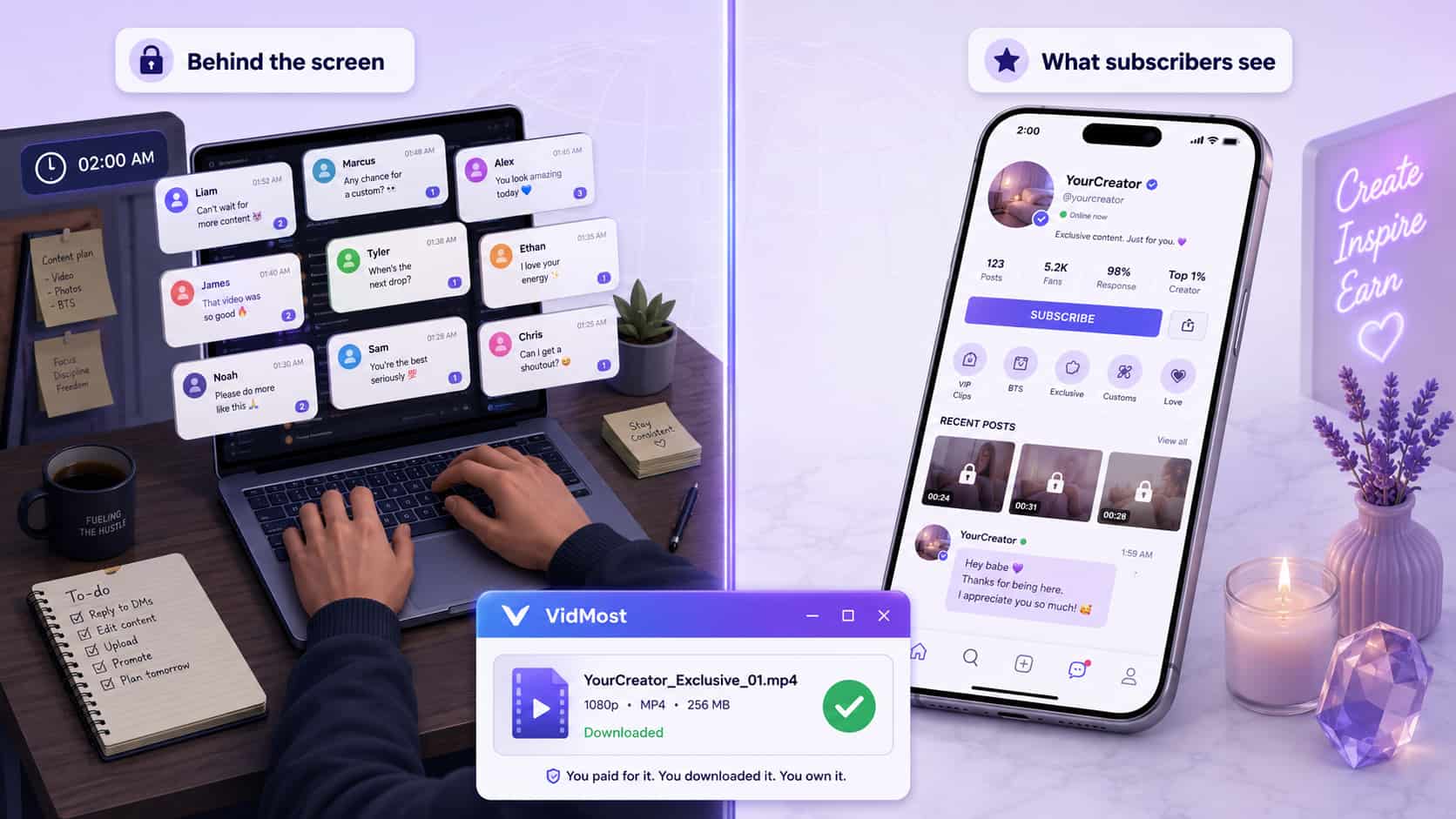
A high-earning creator — often based in the US or Europe — outsources fan interaction to an agency. The agency hires Filipino workers. Those workers respond to messages, run conversations, push content sales, and maintain the subscriber relationship that keeps the money flowing. The subscriber believes he’s talking to the woman in the photos. He’s actually talking to someone with 16 tabs open and a sales target to hit before the shift ends.
The BBC spoke to one woman earning under $2 an hour. Eight-hour shifts, five days a week. She was generating hundreds of dollars in sales per shift — for the creator. The creator takes a cut. The agency takes a cut. The worker who actually kept the subscriber engaged gets $2 an hour.
OnlyFans made $7.2 billion in 2024. The person typing the messages that built those relationships saw almost none of it. This is labor extraction with a digital face — value generated at the bottom, captured at the top. The Philippines is at the bottom.
Why the Philippines Specifically?
This isn’t random.
The Philippines has near-native English fluency that almost no other developing country can match. Most Filipinos are online through phones, making content creation accessible without expensive hardware. The population is young. Formal employment options are shrinking. The value of a foreign dollar is deeply understood.
Two decades of BPO (business process outsourcing) culture did something else: it normalized earning foreign currency by providing a digital service to someone you’ll never meet. When the call center industry started contracting, those skills didn’t disappear. They moved — into IT, into virtual assistant work, and into content management for OnlyFans creators.
The infrastructure built for compliance and digital service is still running. It just has a new client.
Average creator earnings in the Philippines run between $130 and $180 a month. Low by any Western measure. But by provincial Philippine standards, that covers utilities, a sibling’s school fees, one less reason to send someone abroad. It’s not wealth. It’s enough to matter.
The Catholic Guilt You Don’t See
Here’s what most foreign men miss entirely.
The Philippines is a Catholic-majority country with deeply conservative public morality around sexuality. The surface presentation is warm, friendly, open. What happens behind closed doors is a completely different conversation. The gap between the two is survival.
A Filipina doing this work is almost certainly not telling her family. She might say she’s a VA. She might say it’s just an online job. If her barangay found out — if her parents found out — the consequences could end relationships permanently and damage her family’s standing in the community. Or in some cases, the family doesn’t ask questions as long as money is coming in. That doesn’t erase the shame she carries privately.
She’s maintaining two identities. One online. One at home. The psychological cost of that doesn’t show up in any earnings report. Catholic guilt is real. Social stigma is real. She lives with both, every single day.
The Exploitation Runs Deeper Than Low Pay
Chatter agencies take a cut. Content management companies take a cut. The women at the bottom — whether chatters or creators — are often working without contracts, without defined rights, without any protections a formal employer would be required to provide.
A UK union representing chatters told BBC News it was concerned about unregulated conditions and exposure to harmful content with no accountability framework. The platform posted $7.2 billion in revenue and declined to comment. The agencies pay $2 an hour. The government has no framework for any of it.
What This Means If You’re Meeting Women Online
If you’re a foreign man meeting Filipinas online, some percentage of the women you encounter are active in this economy. Some are creators. Some have been chatters. Some have spent months or years in spaces where intimate online interaction with strangers was literally their job.
That doesn’t make them bad people. It means the relational context they bring is different from what most men assume.
A woman who has learned that male attention online has monetary value doesn’t automatically reset that frame when she’s talking to someone she’s genuinely interested in. It takes time for a connection to feel categorically different from work. Most men don’t think to give it that time — they expect instant authenticity from someone who’s spent months performing it professionally.
The reverse also exists. Some men seek out this population specifically, expecting the economic gap to give them leverage. They treat the woman’s background as permission for a transactional dynamic.
Here’s what you need to understand: the women in this economy are not a monolith. Some are there strictly for income and hold entirely separate personal values. Some have internalized the transactional lens more deeply. Some want out and are genuinely looking for something real.
Her background doesn’t tell you what she is. The relationship does. Give it the time to show you.
One practical note: if a connection has never made it to a real-time video call, keep that in mind. The chatter economy is built around exactly that gap — the space between the profile and the person actually typing.
A Note on What You’re Actually Paying For
If you subscribe to content creators — on OnlyFans, Fansly, or anywhere else — it’s worth understanding something most people don’t think about until it’s too late: the content you pay for today can disappear tomorrow.
Creators delete old posts. Accounts get suspended. Platforms change policies. PPV content expires. When any of that happens, the videos and photos you paid to unlock become inaccessible — and neither the creator nor the platform offers refunds.
VidMost is built for lawful personal archiving workflows across 1,000+ supported sites. For member platforms like OnlyFans and Fansly, use it only for content your account can view and that you are allowed to save under platform terms, creator permission, and local law.
Paid access does not automatically grant redistribution or permanent-save rights. VidMost keeps the workflow simple when saving is permitted — no technical background required, no command line.
They’re Not Broken. The System Is.
The women doing this work are not cautionary tales. They’re not the reason to distrust every Filipina you meet online. They’re women who looked at what was in front of them and picked the option that kept the lights on.
Nobody wakes up at 14 dreaming about texting strangers for $2 an hour. Nobody maps that out as a career. But when your choices are a call center job that may not exist in two years, an overseas placement that means leaving your kids, or an online platform where your English and your phone and your tolerance for uncomfortable work can generate income — the math does itself.
There’s no empowering version of that decision. There’s just the version where you eat and the version where you don’t.
That’s the part people skip when they judge. They see the platform. They see the content. But they don’t see the woman checking her phone at 2 a.m. in a boarding house in Pasig, running 12 chats simultaneously so she can send tuition money home by Friday. She’s not making a statement. She’s making a payment.
What makes me angry isn’t the women. It’s the infrastructure. The agencies paying $2 an hour while a single creator pulls in thousands off the work those women generate. The platform posting $7.2 billion in revenue and declining to comment on labor conditions. The government that has watched this economy grow for years without building a single protection for the workers inside it.
The same English fluency, the same digital skills, the same work ethic that built the call center industry built this one. The resource being extracted just changed form. The extraction didn’t.
The women you meet online here are not abstractions. Some of them are carrying this quietly behind a profile that shows nothing of it. You don’t have to fix that. But you should know it’s there.
Frequently Asked Questions
Are all Filipina OnlyFans creators using chatters to manage their accounts? No. Many Filipina creators manage their own accounts directly. The chatter system is more common among high-earning Western creators who outsource fan interaction to agencies. If you’re talking to a smaller, independent creator, there’s a much higher chance it’s actually her responding.
How can I tell if I’m talking to a chatter or the actual creator? Request a real-time video call early. Chatters work from scripts and can’t easily jump on video as the person in the profile. If there’s consistent resistance, delays, or excuses that stretch beyond a reasonable timeframe, that’s a signal worth taking seriously.
Is it legal for agencies to hire workers to impersonate creators? It exists in a legal gray zone. OnlyFans’ terms of service technically prohibit account sharing, but enforcement is minimal. Labor laws in the Philippines don’t specifically address this type of work, leaving these workers without a clear legal framework for protection or recourse.
What should I do if I find out the woman I’ve been messaging is actually a chatter? That depends on what you were looking for. If you were paying for a parasocial relationship and feel deceived, that reaction is valid. If you were paying for content and received it, the chatting element may matter less. Either way, knowing the reality before investing emotionally or financially is always better.
Can I save OnlyFans videos I’ve already paid for? Only if platform terms, creator permission, and local law allow it. Paid access means you can view the content; it does not automatically grant a separate right to save or redistribute it. VidMost should be used only for lawful personal archiving within your authorization scope.
Why don’t these women just find other work? Because other work often doesn’t exist, doesn’t pay enough, or requires leaving the country. The call center industry is shrinking. Formal jobs require degrees many don’t have. Overseas work means years away from family. This economy exists because the alternatives are worse — not because the work is good.